Application-specific laser welding and cleaning configurations developed through physical testing on your materials. Each solution includes parameter documentation, weld qualification data, and integration support.
Automotive OEMs and Tier 1 suppliers require weld processes that meet stringent cycle time targets while maintaining consistent metallurgical quality across high-volume production. Our FiberWeld Pro systems are deployed in body-in-white assembly lines welding galvanized steel, aluminum alloys (5xxx and 6xxx series), and dissimilar metal combinations.
Our beam oscillation technology addresses the fundamental challenge of zinc vapor porosity in galvanized steel welds. By programmatically varying the beam path during welding, zinc vapor escapes through the trailing edge of the weld pool rather than becoming trapped as porosity. Independent cross-section analysis by a third-party metallurgical lab confirmed porosity levels below 2% by area on our customer's 1.2mm DX54D+Z galvanized joints, versus 8–12% with conventional fiber laser welding parameters.
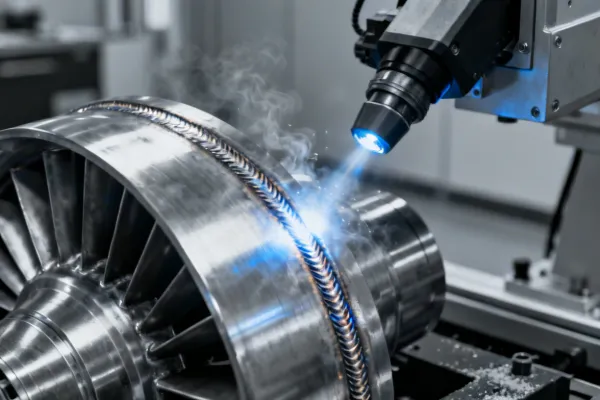
Aerospace weld joints must satisfy demanding fatigue life requirements while operating in extreme thermal environments. Our systems weld titanium alloys (Ti-6Al-4V, Ti-6Al-2Sn-4Zr-2Mo), nickel superalloys (Inconel 718, Waspaloy), and aluminum-lithium alloys with parameters specifically developed to minimize the heat-affected zone and control post-weld distortion.
For a recent turbine engine housing application, our applications team developed parameters that achieved a heat-affected zone width of 0.8mm on 2mm-thick Inconel 718, verified through metallographic cross-section analysis. The customer's fatigue testing program subsequently confirmed that welded samples met their S-N curve requirements at 10^7 cycles, though the specific fatigue values are proprietary to that customer.
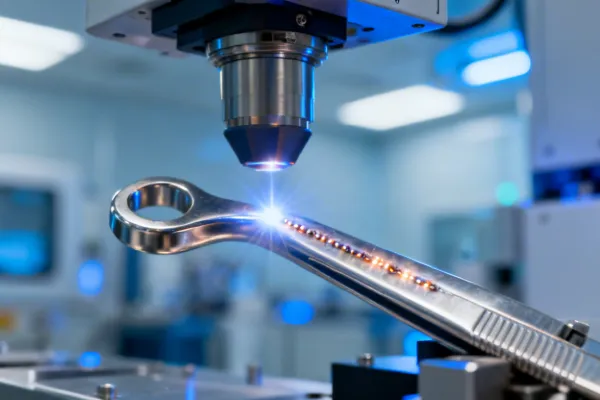
Medical device welding demands two things simultaneously: weld joints strong enough to survive the mechanical loads of surgical use, and surface finishes smooth enough to prevent bacterial adhesion and tissue irritation. Our micro-welding systems achieve weld bead widths as narrow as 0.3mm on 316L and 17-4 PH stainless steels, with surface roughness (Ra) values below 1.6 μm directly after welding.
For implantable device applications, we specifically optimize parameters to avoid chromium carbide precipitation in the weld heat-affected zone, which can compromise corrosion resistance in physiological environments. We provide weld cross-section documentation and can coordinate with accredited third-party labs for biocompatibility testing per ISO 10993 if required by your regulatory pathway.
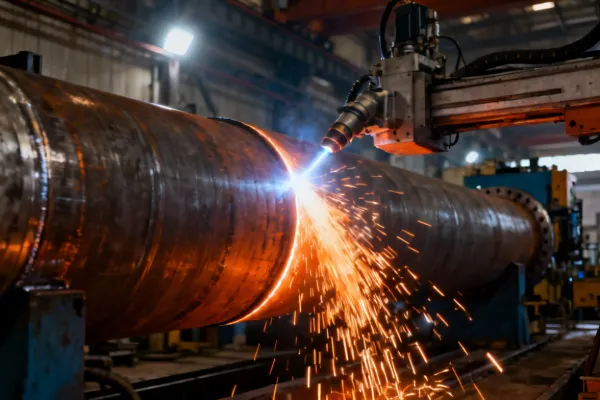
Energy sector fabricators working with thick-section carbon and alloy steels need deep-penetration welds that pass radiographic and ultrasonic inspection on the first attempt. Our high-power systems (6kW–12kW) achieve single-pass full-penetration welds in carbon steel up to 10mm thick, eliminating the multi-pass sequences that drive cost and distortion in conventional arc welding.
A notable limitation: for wall thicknesses above 10mm, our current systems require multi-pass strategies with intermediate parameter adjustments. We are transparent about this because it affects cycle time calculations. For a recent heat exchanger manufacturer, our 8kW system reduced total welding time by 55% versus their previous SAW (submerged arc welding) process on 8mm-thick P91 chromium-molybdenum steel tubes, while meeting ASME Section IX qualification requirements.
Our applications lab has developed welding parameters for over 850 custom configurations. Send us your sample parts and joint drawings, and we will provide a feasibility assessment with documented test results at no cost for qualified projects.
Submit Your Application for Review